

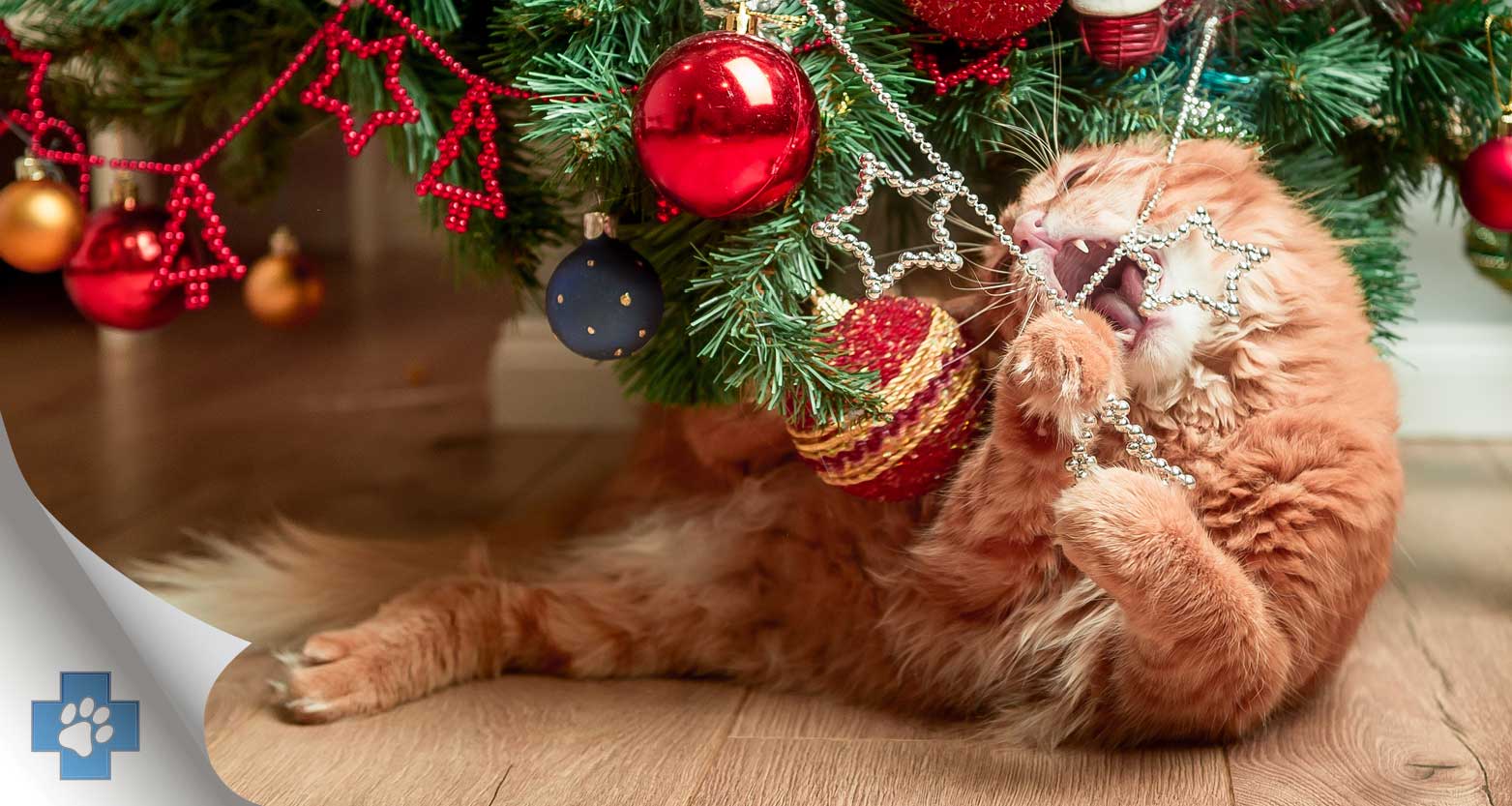
Christmas Dangers for Pets: Foods, Plants and Decorations to Avoid
Every December, veterinary clinics see an increase in emergency visits linked to pets ingesting foods, decorations, or plants that are harmless to people but dangerous for animals.
Christmas is a time of celebration, food, visitors and decorations, which can all be exciting for pets. However, the festive season also introduces many unfamiliar items into the home. Curious dogs and cats often investigate new smells and objects, and unfortunately that curiosity can sometimes lead to illness or injury.
Understanding the most common Christmas hazards can help you enjoy the festivities while keeping your pets safe and healthy.
Common Christmas Foods That Are Dangerous for Pets
Many traditional Christmas foods are unsafe for dogs and cats. While it may be tempting to share leftovers or treats with your pet, even small amounts of certain ingredients can cause serious health problems.
Chocolate
Chocolate contains theobromine, a chemical that dogs cannot metabolise effectively. Toxicity can cause vomiting, diarrhoea, tremors, seizures and heart rhythm problems.
Dark chocolate and baking chocolate are especially dangerous because they contain higher concentrations of theobromine. Even small amounts can be harmful to small dogs.
Cats are less likely to eat chocolate, but it is still unsafe for them if ingested.
Grapes and Raisins
Grapes and raisins are common ingredients in Christmas puddings, fruit cakes and mince pies. Unfortunately, they are highly toxic to dogs.
Even a small number of grapes or raisins can trigger sudden kidney failure. The exact toxic dose varies between dogs, which means any ingestion should be treated as a veterinary emergency.
Cooked Bones: Why Dogs Should Not Eat Them
Many owners wonder if dogs can eat cooked bones after a roast dinner, but cooked bones are one of the most common causes of intestinal injury in dogs
Cooked bones, especially poultry and pork bones, are another common cause of emergency veterinary visits during the festive season. While dogs may instinctively chew bones, cooked bones become brittle and can easily splinter when chewed.
Sharp fragments can lodge in the mouth, throat, stomach or intestines, potentially causing choking, internal injuries or dangerous blockages. Poultry bones from turkey, chicken and duck are particularly risky because they break into small, sharp pieces.
Both young and senior dogs are at risk of bone impaction or splinter-related injuries, regardless of how strong their teeth appear or how good their dental health is. Even dogs that chew confidently can suffer serious complications from cooked bones.
For this reason, it is safest to dispose of leftover bones securely and avoid feeding cooked bones to pets altogether.
Fatty Foods
Christmas meals often include rich foods such as ham, roast meats, turkey skin, gravy and buttery side dishes.
These foods are extremely fatty and can trigger pancreatitis, a painful inflammation of the pancreas. Symptoms may include vomiting, abdominal pain, lethargy and loss of appetite. Pancreatitis often requires hospital treatment and can be life-threatening in severe cases.
Onions and Garlic
Onions, garlic and related vegetables are commonly used in stuffing, sauces and gravies. These ingredients can damage red blood cells in dogs and cats, leading to anaemia.
Cooked, raw or powdered forms can all be harmful. Because they are often mixed into dishes, pets may consume them without owners realising.
Alcohol and Sweeteners
Some festive desserts and drinks contain alcohol or artificial sweeteners such as xylitol. Both are extremely dangerous to pets.
Alcohol can cause vomiting, breathing problems and central nervous system depression. Xylitol can cause a rapid drop in blood sugar and severe liver damage in dogs.
Vet tip
Even small amounts of certain foods can cause illness. If your pet eats something unusual, it is safest to contact your vet immediately.
Christmas Plants That Are Toxic to Pets
Festive plants are a classic part of Christmas decorations, but some can be harmful if chewed or ingested.
Poinsettias
Poinsettias have a reputation for being highly toxic, although they are usually less dangerous than people believe. However, they can still irritate the mouth and stomach if eaten.
Pets may drool, vomit or show mild digestive upset after chewing the leaves.
Christmas Lilies
Lilies are extremely toxic to cats. Even small exposures can cause severe kidney failure.
Cats may be poisoned simply by brushing against lily pollen and grooming it off their fur. All parts of the plant are dangerous, including petals, leaves and water from the vase.
For households with cats, lilies should be completely avoided.
Mistletoe
Mistletoe berries and leaves contain compounds that can affect the digestive and cardiovascular systems.
Pets that ingest mistletoe may develop vomiting, diarrhoea, drooling or abnormal heart rhythms.
Holly
Holly leaves and berries can cause irritation of the mouth and stomach. Pets may experience vomiting, lethargy and gastrointestinal upset after ingestion.
If you decorate with festive plants, it is best to place them well out of reach of pets or choose artificial alternatives.
Christmas Decorations That Can Harm Pets
Decorations often attract curious pets, particularly cats and young dogs.
Shiny objects, dangling ornaments and lights can easily become chew toys or playthings.
Tinsel
Cats are particularly drawn to tinsel because it moves and sparkles. Unfortunately, if swallowed it can cause dangerous intestinal blockages.
Linear objects such as tinsel can become trapped in the digestive tract and may require emergency surgery to remove.
Christmas Tree Water
Tree stands often contain stagnant water. This water may contain bacteria, mould or fertiliser residue from the tree.
If pets drink from the tree stand, they may develop vomiting or diarrhoea.
Covering the base of the tree or restricting access can help prevent this.
Electrical Lights
Electrical cords are another hazard, particularly for puppies and kittens that enjoy chewing.
Biting into live wires can cause burns to the mouth or even electrocution.
Use cord protectors or secure cables so they cannot be easily reached.
Glass Ornaments
Glass decorations can break easily if knocked from the tree.
Broken pieces can cut paws or be swallowed by curious pets. Shatter resistant ornaments are a safer option for households with animals.
Wrapping Paper, Ribbons and Packaging
Gift wrapping materials are a surprisingly common cause of emergency veterinary visits during the holiday season.
Cats in particular are attracted to ribbon, string and curling gift wrap. If swallowed, these materials can become lodged in the digestive tract.
Linear foreign bodies such as ribbon can act like a saw inside the intestines as the digestive system contracts. This can cause severe internal injury and often requires emergency surgery.
After opening gifts, dispose of wrapping materials promptly and keep them away from pets.
Holiday Visitors and Escaping Pets
Christmas gatherings often mean more people coming and going from the home. While this is enjoyable for families, it can increase the risk of pets escaping.
Dogs may slip out through open doors or gates while guests arrive and leave. Cats may hide in unfamiliar areas or become stressed by the extra activity.
To reduce the risk of escape:
- ensure pets have secure identification and microchips
- keep doors and gates closed where possible
- provide a quiet room where pets can retreat if they feel overwhelmed
Maintaining a calm space helps reduce stress and keeps pets safe during busy celebrations.
Signs Your Pet May Have Eaten Something Dangerous
Symptoms of poisoning or gastrointestinal obstruction can vary depending on the substance involved.
Signs may include:
- vomiting
- diarrhoea
- lethargy
- tremors or seizures
- drooling
- abdominal pain
- loss of appetite
- unusual behaviour
If you notice any of these signs during the holiday season, seek veterinary advice as soon as possible.
Early treatment can significantly improve outcomes.
Tips for a Pet Safe Christmas
Simple precautions can prevent most festive accidents.
- Keep chocolates and desserts out of reach
- Ask guests not to feed pets table scraps
- Secure decorations and electrical cords
- Dispose of wrapping materials immediately
- Keep toxic plants away from pets
- Provide safe pet treats so your pet still feels included
- Ensure pets have a quiet space away from noisy celebrations
Planning ahead helps ensure your pet enjoys the festivities safely.
When to Contact Your Vet
If you suspect your dog or cat has eaten something toxic, contact your veterinarian straight away.
Prompt treatment can prevent serious complications and may involve inducing vomiting, administering medication or providing supportive care. Keep in mind that older pets may be more vulnerable to issues stemming from ingestion of hazardous foods or objects. Don’t hesitate to give us a call if you suspect a problem.
At Cherrybrook Vet Practice, our team is here to help keep pets safe during the festive season and throughout the year. If you are unsure whether something is dangerous for your pet, it is always better to seek advice early.
Safe and Happy Holiday Celebrations with Your Pet
Christmas is a time for celebration, but it also brings new risks for pets. Rich foods, festive plants, decorations and wrapping materials can all pose unexpected dangers.
By understanding the most common hazards and taking simple preventative steps, pet owners can significantly reduce the chance of accidents during the holidays.
With a little preparation and supervision, your pet can enjoy the festive season safely and comfortably alongside the rest of the family.
Be sure to contact Cherrybrook Vet if you have any concerns. Our after hours emergency service is in operation over holiday periods for your peace of mind.